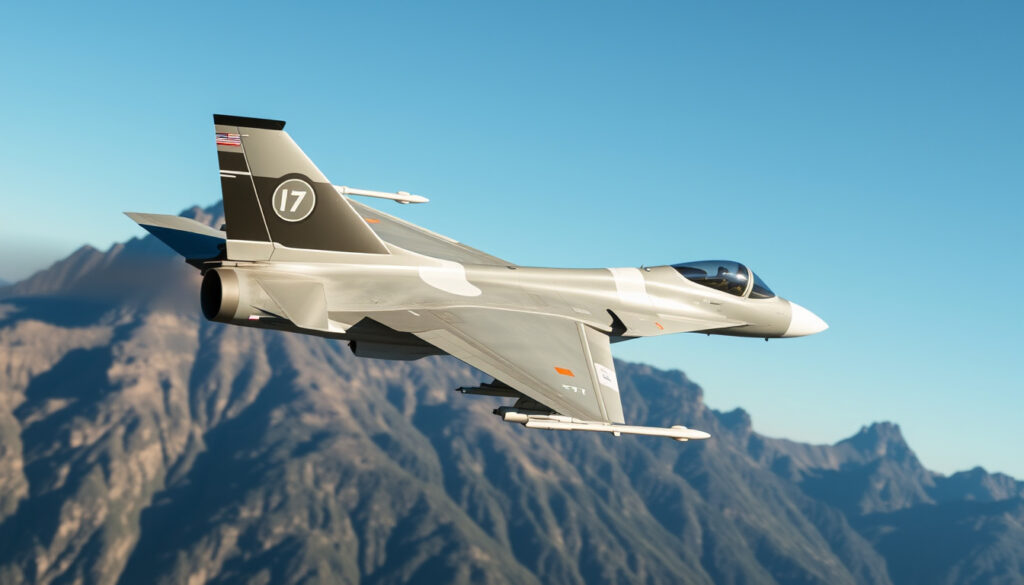
CAC/PAC JF-17 Thunder: Specs, Comparisons & Exports
Pakistan’s air force has bet heavily on a fighter jet it co-produces with China — and that bet is starting to look like a source of new pressure rather than relief. The CAC/PAC JF-17 Thunder, built at the Pakistan Aeronautical Complex in Kamra, has become the backbone of the Pakistan Air Force while simultaneously drawing export interest from at least five nations.
Manufacturer: Chengdu Aircraft Corporation (CAC) / Pakistan Aeronautical Complex (PAC) · Primary Roles: Interception, ground attack, anti-ship, aerial reconnaissance · Development Start: 1999 joint venture · Production Site: PAC Kamra · Chinese Export Name: FC-1 Xiaolong (Fierce Dragon)
Quick snapshot
- Multi-role fighter roles (EurAsian Times)
- Joint PAC/CAC production (Wikipedia)
- PAF fleet of around 120 aircraft (EurAsian Times)
- Exact Pakistan inventory numbers (EurAsian Times)
- Block 4/5 development status (Wikipedia)
- Confirmed export contract values (Defence Security Asia)
- Block III inducted in 2023, fully operational 2024 (EurAsian Times)
- Serial production began December 2020 (Wikipedia)
- Saudi exercise with Rafale Jan 26–Feb 6, 2024 (EurAsian Times)
- Export surge colliding with limited PAC capacity (Wikipedia)
- Indonesian talks reported ongoing (Defence Security Asia)
- Regional rivalry with Indian Tejas intensifying (Taylor & Francis)
| Attribute | Value |
|---|---|
| Origin | Pakistan / China joint venture |
| First Flight | Not specified |
| Crew | Single-seat |
| Variants | Block 2, Block 3, Block 4 |
| Top Speed | Mach 1.6 |
| Engine | Klimov RD-93MA |
| Payload | 3,500–4,000 kg |
| Hardpoints | 8 |
How many JF-17 Thunder does Pakistan have?
The Pakistan Air Force operates around 120 JF-17 Thunder aircraft across its multiple block variants, according to reporting from the EurAsian Times. That count makes it the largest single-fighter type in the PAF fleet — a remarkable position for a platform that traces its origins to a 1999 joint development agreement between the Chengdu Aircraft Corporation and the Pakistan Aeronautical Complex.
Production history
PAC began serial production of the JF-17 in December 2020 with the Block 3 variant, marking a significant ramp-up after years of limited-rate manufacturing. The facility in Kamra was reported to have capacity for around 20 aircraft per year as of 2016, though actual output has varied. The joint venture structure means China handles airframe production while Pakistan manages final assembly and avionics integration — a model that gives Islamabad some manufacturing independence but also creates bottlenecks when both domestic and export demand spike simultaneously.
Current inventory estimates
Block 3 represents the first major upgrade of the platform, incorporating AESA radar, an enhanced heads-up display, electronic countermeasures, and an additional hardpoint over earlier variants. The Block III was inducted into the Pakistan Air Force in 2023 and declared fully operational in 2024. The aircraft is tasked with replacing the aging Mirage fleet, positioning itself as the PAF’s first 4.5-generation fighter — a classification that places it between fourth-generation legacy aircraft and the full fifth-generation stealth platforms fielded by larger air forces.
The implication: Pakistan’s domestic demand for new JF-17s is likely to remain high for the next decade as Mirages retire and the fleet absorbs Block 3 and future upgrades. That domestic appetite competes directly with export orders — a tension the Kamra plant was not designed to absorb simultaneously.
What is special about JF-17 Thunder?
The JF-17 Thunder occupies a specific niche in the global fighter market: a lightweight multirole aircraft that delivers 4.5-generation capabilities at roughly half the cost of Western equivalents like the F-16 or Gripen. Known in China as the FC-1 Xiaolong (Fierce Dragon), the aircraft combines a Chinese airframe with Western avionics and a Russian engine — a hybrid pedigree that reflects its multinational supply chain.
Key features and capabilities
Block 3 brings the KLJ-7A active electronically scanned array radar, a three-axis fly-by-wire flight control system, and integration with the PL-15E beyond-visual-range missile rated at 145 kilometers. The aircraft carries the PL-10E high-off-boresight air-to-air missile cued by helmet-mounted sight or display. With 8 hardpoints and a maximum payload of 3,500–4,000 kilograms, the platform offers meaningful strike flexibility while maintaining the agility expected of a single-engine fighter.
Multi-role design
The aircraft was designed from the outset for multiple mission types: air superiority, interception, ground attack, anti-ship, and aerial reconnaissance. That breadth explains its appeal to export customers operating on tight defense budgets — countries that want versatile aircraft without the lifecycle cost of twin-engine heavy fighters. The hybrid weapons suite supports both guided munitions for precision strikes and unguided ordnance for area attacks.
Block variants overview
Block 2 represented the initial production standard with improved avionics over the prototype. Block 3, the current production variant, adds the AESA radar, enhanced electronic warfare suite, and structural refinements. Block 4 is anticipated to bring further engine upgrades and sensors, though detailed specifications remain limited in open sources. The incremental block approach allows PAC to incorporate new technologies without redesigning the entire platform — a pragmatic strategy for a program that must balance development costs against operational needs.
Is JF-17 better than Tejas?
This question sits at the center of a persistent regional rivalry that extends well beyond technical specifications. The LCA Tejas, developed by Hindustan Aeronautics Limited for the Indian Air Force, occupies a similar lightweight multirole niche — and the two aircraft are frequently compared in academic and industry analysis. A 2025 study published through Taylor & Francis specifically examined the export potential of both platforms, noting the competitive dynamics driving their development trajectories.
Performance specs
In raw numbers, the Tejas holds a slight edge in maximum speed at Mach 1.8 compared to the JF-17’s Mach 1.6. Both aircraft feature AESA radar in their current production variants. The JF-17 Block 3 carries 8 hardpoints against the Tejas Mk1A’s 7–8, with similar payload capacity around 3,500 kilograms. The fly-by-wire systems differ in complexity, with the JF-17 Block III using a three-axis configuration while the Tejas employs a digital flight control system developed for the Indian program.
Tejas Mk2 advantages
HAL officials have publicly stated that the Tejas is a more capable, maneuverable, agile, and reliable aircraft than the JF-17 — claims that must be weighed against the fact that Tejas Mk1A deliveries have faced delays. The Mk2 variant, still in development, promises a heavier landing gear for carrier operations and an extended range variant, but delivery timelines remain uncertain. For export customers, delivery reliability matters as much as technical specifications — and here the JF-17 has an operational head start of several years.
The pattern: both aircraft are genuinely competitive in the lightweight multirole category, but the JF-17’s earlier operationalization and export experience give it market momentum that the Tejas has not yet captured.
Which is more powerful, Rafale or JF-17 Thunder?
The comparison between the JF-17 Thunder and the Dassault Rafale is inherently asymmetric — one is a lightweight single-engine fighter, the other a twin-engine omnirole platform that sits in an entirely different weight class. Yet the comparison matters because both aircraft have appeared in the same operational contexts, most notably the Saudi exercise in January–January 2024 when JF-17 Block III trained alongside Rafale jets from January 26 to February 6.
Power and avionics
The Rafale carries a significantly higher payload — sources report approximately 9,500 kilograms against the JF-17’s 3,500–4,000 kilograms — and a higher thrust-to-weight ratio derived from its twin-engine configuration. The Rafale’s RBE2 AESA radar offers detection ranges reported between 100 and 200 kilometers, while the JF-17’s KLJ-7A is rated at approximately 170 kilometers. The longer detection range does not necessarily translate to tactical advantage when system performance, kinematics, and weapons load are factored in.
Cost comparison
The Rafale’s unit cost substantially exceeds that of the JF-17 — in some configurations, at least twice the price. For a country operating on a constrained defense budget, the cost-per-capability calculation favors the JF-17 for certain missions, particularly interception and air patrol where loiter time and payload flexibility matter less than presence and responsiveness. The Rafale’s advantages compound in deep strike missions, carrier operations, and sustained air superiority — roles that justify the premium for air forces that can afford them.
Pakistan’s choice of the JF-17 over heavier platforms reflects budgetary necessity, not capability preference. The PAF’s decision to operate the Thunder alongside — not instead of — more capable aircraft like the J-10CP illustrates that the aircraft fills a specific role in the force structure.
Which country buys JF-17 Thunder from Pakistan?
The export dimension of the JF-17 story is where the program’s future may be decided. Multiple nations have expressed interest in acquiring the aircraft, with reports indicating at least five countries in various stages of discussion. The Kamra production line, already stretched by domestic orders, would face genuine capacity constraints if export commitments materialize.
Export interest nations
Countries evaluating or negotiating JF-17 purchases include those in the Middle East, Africa, and Southeast Asia — regions where defense budgets favor cost-effective platforms over premium Western systems. The aircraft’s multirole flexibility and relatively low lifecycle cost make it attractive to air forces modernizing without the budget for twin-engine heavy fighters. Reportedly, Indonesia has engaged in talks regarding potential acquisition, representing a significant market given Jakarta’s ongoing fleet modernization efforts.
Recent deals
Confirmed export contracts for the JF-17 remain limited in publicly available sources, though operational deployments have generated field experience that bolsters marketing efforts. The aircraft’s performance in the Saudi exercise alongside Rafale — with the Pakistan Military’s ISPR noting recognition earned through combat performance against advanced jets — provides export-promotional data points that PAC leverages in customer presentations.
What this means: the export opportunity is real, but PAC’s capacity to serve both domestic and foreign customers simultaneously is not. Any surge in foreign orders creates direct competition with Pakistan’s own fleet replacement timeline — a tension that could slow export commitments until production capacity expands or the domestic backlog clears.
| Specification | JF-17 Block 3 | Tejas Mk1A | Rafale |
|---|---|---|---|
| Engine Configuration | Single (RD-93MA) | Single (F404) | Twin (F414) |
| Top Speed | Mach 1.6 | Mach 1.8 | Mach 1.8+ |
| Maximum Payload | 3,500–4,000 kg | ~3,500 kg | 9,500–9,900 kg |
| Hardpoints | 8 | 7–8 | 14 |
| Radar Type | AESA (KLJ-7A) | AESA | AESA (RBE2) |
| Radar Detection Range | ~170 km | Not confirmed | 100–200 km |
| BVR Missile | PL-15E (145 km) | Astra Mk1 | Meteor (100+ km) |
| Unit Cost Est. | $30–50M | $50–70M | $100–150M |
| Status | Operational (2024) | Delivered (limited) | Operational |
The comparison reveals the trade-offs each aircraft makes: the JF-17 optimizes for cost and specific mission profiles, while the Rafale delivers maximum payload and versatility at a premium price point that limits its customer base to nations with larger defense budgets.
Confirmed vs Unclear
Confirmed
- Multi-role fighter roles — interception, ground attack, anti-ship, reconnaissance
- Joint PAC/CAC production with serial manufacturing at Kamra since December 2020
- Block III inducted in 2023, fully operational by 2024
- AESA radar, fly-by-wire, PL-15E missile integration in Block 3
- PAF fleet of around 120 aircraft across variants
Unclear
- Exact current Pakistan inventory by block variant
- Block 4 development timeline and specifications
- Confirmed export contract details and delivery schedules
- Full lifecycle costs for comparison with competitors
- Performance data from actual combat operations
“Tejas is a more capable, maneuverable, agile, and reliable aircraft than the JF-17.” — HAL official (LCA development), EurAsian Times
“Rafale has distinct advantage in payload capacity, range, and thrust-to-weight ratio over JF-17 Block 3.” — Analyst, YouTube JF-17 vs Rafale Analysis
“JF-17 Block III displayed combat performance against advanced jets like Rafale, earning recognition.” — ISPR (Pakistan Military PR), EurAsian Times
The export surge colliding with Pakistan’s domestic production constraints is the central tension shaping the JF-17 program’s near-term future. PAC built capacity to serve one primary customer; if export orders materialize at the scale some reports suggest, the Kamra plant will need to choose between fulfilling foreign contracts and keeping the PAF’s Mirages-replacement schedule on track. That choice will define whether the Thunder becomes a regional success story or a victim of its own appeal.
Related reading: JF-17 Thunder vs Tejas specs comparison
The CAC/PAC JF-17 Thunder bolsters Pakistan’s air force through evolving blocks and advanced specs, as detailed in this PAF-focused overview, amid rising export pressures.
Frequently asked questions
What is JF-17 Thunder Block 3?
Block 3 is the current production variant of the CAC/PAC JF-17 Thunder, featuring AESA radar, enhanced avionics, an additional hardpoint, and improved electronic warfare systems. It was inducted into Pakistan Air Force service in 2023 and declared fully operational in 2024.
What is the JF-17 Thunder engine type?
The JF-17 Block 3 is powered by the Klimov RD-93MA turbofan engine, a Russian-designed powerplant adapted for the aircraft. Earlier variants used the RD-93, with the MA variant offering improved thrust for the Block 3’s enhanced performance requirements.
What is Pakistan’s best jet?
Pakistan’s most capable fighter is generally considered the Chengdu J-10CP, a twin-engine platform that entered service more recently than the JF-17. However, the JF-17 Thunder represents the largest fleet component and the backbone of daily operations across multiple mission types.
What jet has never lost a dogfight?
This question typically refers to the F-16, which has a documented air-to-air record with zero losses in verified engagements. No combat platform has an unblemished record in all conditions and scenarios, and the JF-17 has not been tested in equivalent high-intensity engagements.
What is the JF-17 Thunder price?
Estimated unit costs for the JF-17 range from $30 to $50 million depending on configuration and block variant, substantially lower than Western equivalents like the F-16 or Gripen that typically command $60–100 million per aircraft.
Is JF-17 Block 3 better than Rafale?
The JF-17 Block 3 and Rafale occupy different weight and cost categories. The Rafale offers superior payload, range, and thrust-to-weight ratio in exchange for a significantly higher price. For budget-conscious air forces, the JF-17 delivers more capability per dollar; for those requiring deep-strike and sustained air superiority missions, the Rafale’s advantages justify the premium.
What is the difference between JF-17 Block 2 and Block 3?
Block 3 represents the most significant upgrade since the platform’s introduction, adding AESA radar, a three-axis fly-by-wire system, enhanced electronic warfare capabilities, an additional hardpoint, and improved weapon integration including the PL-15E beyond-visual-range missile. Block 2 featured earlier avionics without AESA.
More related posts
 Punta Cana All Inclusive Packages: Best Deals 2026
 Mira KPop Demon Hunters Costume: Outfit Guide & DIY Tips
 Royalton Splash Punta Cana: 5-Star Resort with Giant Water Park
 How to Reset a Router Password – Step-by-Step Factory Reset Guide
 Cedar Hill Golf Course – Northville MI Facts and Rates
 Best Whole House Water Filtration Systems: Top Picks 2025
 Edmonton to Winnipeg Flights: Compare Airlines & Prices
 Freida McFadden Books: Complete Reading Order Guide
