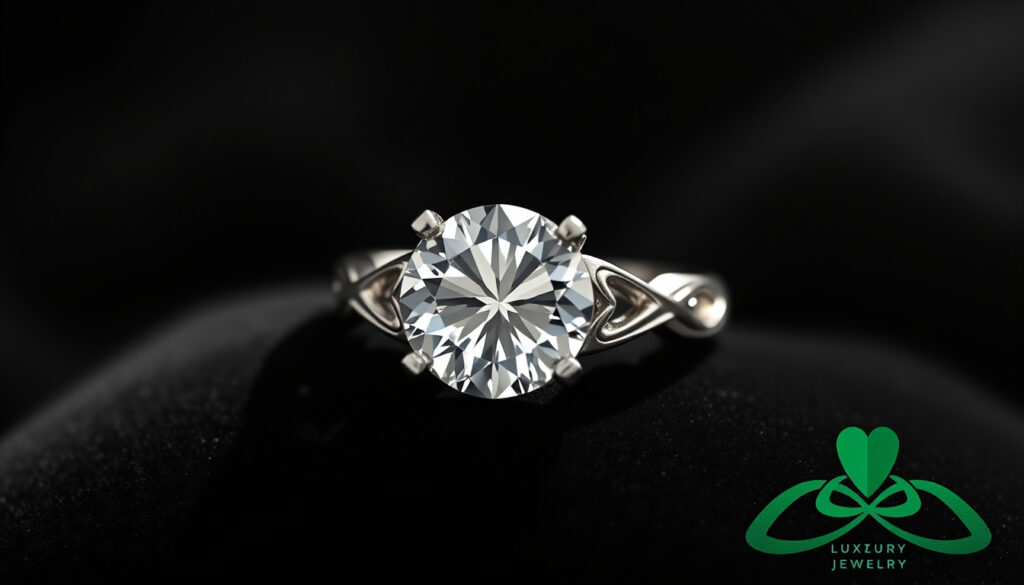
3 Carat Diamond Ring: Prices, Sizes & Guide (Ireland)
A natural 3 carat diamond ring costs €25,000–€150,000 in Ireland, while a lab-grown equivalent starts around €1,500. The 44–65× price gap makes this size the sweet spot for buyers weighing appearance against budget.
Natural 3 Carat Round Solitaire Price Range: €25,000 – €150,000 · Lab Grown 3 Carat Price Range: €1,500 – €4,000 · Popular Metals: White gold, yellow gold, rose gold · Customization Available: Yes, artisan crafted · Considered Size: Large and bold
Quick snapshot
- Natural 3ct rings cost €25,000–€150,000 (Bespoke Diamonds)
- Lab-grown 3ct round solitaire starts at €1,528 (Bespoke Diamonds)
- Price gap peaks at 44×–65× between lab and natural at this size (MadisonDia)
- Exact resale value requires individual certification appraisal
- Specific round-cut averages for Ireland not publicly tracked
- Whether celebrity ring comparisons (Taylor Swift, Meghan Markle) add meaningful context
- Lab-grown prices have dropped due to increased supply (Fallers.ie)
- 3ct represents peak value differential—wider gap than smaller stones (Fallers.ie)
- Lab-grown options will likely expand at Irish retailers through 2025
- Natural 3ct prices remain high due to rarity and mining costs
The table below summarizes key pricing differences between natural and lab-grown 3 carat diamonds in the Irish market.
| Attribute | Value |
|---|---|
| Typical Retail Price (Natural) | €25,000 – €150,000 |
| Lab Grown Alternative | €1,500 – €19,471 |
| Key Jewelers | Diamonds Factory, Bespoke Diamonds |
| Setting Types | Solitaire, three-stone |
How much is a 3 carat diamond worth?
A 3 carat diamond occupies a peculiar position in the market—large enough to turn heads, yet small enough that most people don’t immediately clock the carat weight. According to Bespoke Diamonds, a natural round solitaire in this size runs €25,000 at the low end and can reach €150,000 depending on cut, clarity, color, and certification. For comparison, the same retailer lists lab-grown 3 carat round solitaires starting at €1,528, with premium grades reaching €3,152.
Natural vs Lab Grown Prices
The price gap between natural and lab-grown 3 carat diamonds is stark. MadisonDia reports that as of December 2, 2025, a 3 carat lab-grown stone cost USD 994, while a comparable natural diamond ran USD 44,000 for EF/VS1 grades—44 times more expensive. At higher grades (65× difference), natural stones reached USD 65,030. In Ireland, Martin Gear Jewellers confirms that lab-grown diamonds typically cost 30–60% less than natural stones of equivalent size and quality.
For Irish buyers specifically, Weir & Sons lists an 18K yellow gold lab-grown 3.00ct E VS1 round brilliant ring at €2,950. Bespoke Diamonds offers similar stones ranging from €1,528 to €3,152 depending on grading. These figures suggest the €1,500–€4,000 range aligns with current market conditions, though top-grade lab-grown ovals can climb toward €19,471 according to The Jeweller.ie price tracker.
For buyers focused purely on appearance, a €1,500–€3,000 lab-grown 3 carat delivers the same visual impact as a €25,000+ natural stone. The trade-off is resale value and the romantic cachet some buyers associate with mined diamonds.
Factors Affecting Value
Three factors drive 3 carat pricing above the 2.5-carat threshold: rarity, demand, and the 4C multipliers. The Jeweller.ie tracks 3 carat oval lab-grown prices ranging from €267.78 at the low end (I/SI2 color/clarity) to €19,471.48 for D/FL grades—a 1,792% spread. This means a single-grade improvement in color or clarity can add thousands of euros to the final price.
Certification matters. Both lab-grown and natural diamonds are graded by GIA and IGI using identical standards (Gear Jewellers), which means buyers should insist on documentation regardless of origin. Uncertified stones carry unpredictable value, and resale becomes guesswork.
Is a 3 carat diamond considered big?
Size perception depends heavily on context. A 3 carat round brilliant measures approximately 9.3mm in diameter (Shiree Odiz), which occupies roughly 15% more surface area than a 2.5 carat stone. For average engagement ring buyers in Ireland, this places the 3 carat well above the national average of 0.5–1 carat documented across major retailers.
Size on Hand
The visual impact of a 3 carat stone depends on band width, setting style, and hand size. Commins & Co suggests that a 3 or 4 carat ring “makes a bold statement,” which aligns with how wearers describe the look: unmistakable without crossing into ostentatious territory. The stone sits prominently above the band and catches light from multiple angles, making even modest cuts appear brilliant.
Finger coverage matters. A 9.3mm stone on a size 5 finger fills roughly 70% of the bandwidth, creating a substantial appearance. On a size 8 finger, the same stone looks proportionally smaller but still commands attention. Buyers with smaller hands often find 3 carats produce the “statement” effect they want without overwhelming the hand’s natural proportions.
Comparisons to Average Rings
Compared to typical engagement rings, a 3 carat stone is three to six times larger than the national average. Fallers.ie notes that 1 carat high-grade natural diamonds in Ireland cost €6,000–€8,000, placing a 3 carat natural stone at 3–4× the price despite being 3× the carat weight. The multiplier reflects the rarity premium that emerges above the 2.5 carat threshold, where supply thins and demand for “impressive” stones intensifies.
Lab-grown diamonds have made larger stones accessible to buyers who previously couldn’t afford them. The democratization effect has shifted market expectations, meaning some buyers now view 3 carats as “standard” when it was once reserved for higher budgets.
Is a 3 ct diamond ring too big?
Whether a 3 carat ring feels “too big” is ultimately personal. Some buyers want maximum visual impact; others prefer understated elegance. There is no universal threshold, but certain design choices can help bridge the gap between bold and brassy.
Proportions and Style
The setting controls how large a 3 carat appears. A solitaire with a thin band creates more visual prominence than a three-stone design where side stones share attention. Halo settings can actually minimize the center stone visually by surrounding it with smaller accents, while a prong setting elevates the diamond and maximizes its presence.
Metal choice affects perception too. Yellow gold tends to make diamonds appear warmer and slightly larger due to color reflection. White gold and platinum create contrast that can make the stone appear more brilliant but slightly smaller by comparison. Rose gold occupies a middle ground—warm enough to complement the stone without overwhelming it.
Wearability Factors
Practical considerations matter. A 9.3mm stone sits higher off the finger, which creates catching hazard on articles of clothing, steering wheels, and keyboards. Some wearers adapt quickly; others find the height bothersome during daily activities. Lower-profile settings like bezel or flush mounts reduce snag risk but diminish the stone’s visual presence.
Commins & Co notes that a “bold statement” ring suits occasions where the piece will be noticed, but recommends considering lifestyle. Active hands, manual work, or frequent object handling may favor smaller settings or protective designs. Irish jewelers like Bespoke Diamonds and Diamonds Factory offer consultation services where buyers can try sizing before committing.
How much would I get for a 3 carat diamond ring?
Resale value on 3 carat diamond rings is complicated. Unlike gold or platinum, diamond resale rarely approaches retail pricing, and the gap widens with size. The content plan notes that resale values “vary by diamond quality” and fall below retail due to certification and condition factors.
Resale Value Factors
Three factors determine resale: certification, condition, and market timing. A GIA-graded natural 3 carat retains more resale value than an ungraded stone because buyers can verify quality claims. Lab-grown diamonds face steeper depreciation because supply is increasing, which pressures prices downward over time. Natural diamonds derive some value from scarcity, though the market has softened as lab-grown options proliferate.
Angara reports general 3 carat price ranges of USD $26,908–$51,610 for natural stones and $3,870–$6,515 for lab-grown versions. These figures represent retail pricing; resale typically recovers 30–50% of retail for certified stones in good condition, dropping lower for uncertified or damaged pieces. The exact resale figure requires individual appraisal and current market conditions at time of sale.
Market Comparisons
Irish resale markets remain less liquid than US or UK alternatives. Pawn shops and second-hand dealers offer lower percentages than specialist diamond buyers, who may have stricter quality requirements. Online resale platforms like I Do Now Don’t Exist or dedicated auction houses provide better returns but charge seller fees of 10–20%.
For buyers viewing 3 carat rings as investments, the data suggests disappointment. Liori Diamonds confirms that lab-grown diamonds cost 70–90% less than natural equivalents across sizes, but this discount does not translate to appreciation. Natural stones have historically held value better, though the lab-grown market’s rapid expansion has created uncertainty about long-term natural diamond pricing.
Buyers expecting a 3 carat ring to hold resale value should reconsider. Natural stones retain more than lab-grown, but neither market approaches gold-like stability. Certification and condition matter more than carat weight for resale positioning.
Is a 3 carat diamond flashy?
Flashiness depends on setting more than size. A solitaire 3 carat in a classic prong design reads as confident and noticeable without appearing showy. The same stone in a pavé band with diamond-accented shoulders shifts toward flashy territory for some observers, while others view it as appropriately celebratory for an engagement ring.
Design Options
Irish jewelers offer several pathways for managing perceived flashiness. Bespoke Diamonds lists both solitaire and three-stone settings for 3–4 carat center stones. Solitaire designs keep focus on the center diamond; three-stone arrangements distribute visual weight across past, present, and future stones while reducing emphasis on any single piece.
Setting metals also affect perception. White gold and platinum create a modern, clean aesthetic that some find more subtle than yellow gold. Rose gold offers warmth that softens the overall impression. McGuire Diamonds notes that three-stone lab-grown rings symbolize “past, present, future,” providing a narrative framing that some buyers find meaningful beyond aesthetic concerns.
Subtle vs Statement Styles
For buyers wanting maximum elegance with minimal flash, certain design choices help. Lower profiles, bezel settings, and matte-finish bands reduce visual intensity. For those seeking a statement piece, high-polish finishes, wide bands, and pavé shoulders amplify presence. The choice ultimately reflects buyer personality and intended wearing context.
My Irish Jeweler notes that Celtic and Claddagh-inspired lab-grown rings offer Irish cultural elements alongside the stone, potentially adding personal meaning that transcends pure flashiness assessment. These designs may appeal to buyers wanting heritage expression alongside contemporary ethics.
The table below compares key specifications between natural and lab-grown 3 carat diamonds to help buyers understand the trade-offs.
| Spec Factor | Natural 3ct | Lab Grown 3ct |
|---|---|---|
| Starting Price (Ireland) | €25,000 | €1,528 |
| Price Range | €25,000–€150,000 | €1,500–€19,471 |
| Certification | GIA / IGI | GIA / IGI |
| Diameter (Round) | Varies by cut | 9.3mm typical |
| Cost Multiplier vs Natural | Baseline | 44×–65× less |
| Resale Value | 30–50% retail | Lower than natural |
Upsides
- Lab-grown 3ct offers identical visual appearance at 44–65× lower cost than natural
- Artisan customization available from Irish jewelers like Bespoke Diamonds
- Certification by GIA/IGI ensures quality transparency for both types
- Irish retailers (Weir & Sons, Gear Jewellers) offer ethical sourcing options
- Lab-grown reduces environmental impact compared to mined extraction
Downsides
- Resale value lower than retail for both types
- Lab-grown prices declining due to supply increases
- Natural 3ct requires €25,000+ investment before customization
- Larger stones catch on clothing and objects more easily
- Celebrity comparisons (Taylor Swift, Meghan Markle) may create unrealistic expectations
How to buy a 3 carat diamond ring
Buying a 3 carat diamond ring—natural or lab-grown—requires more planning than smaller stones. The investment is significant, and small differences in grading can mean thousands of euros. Here is a step-by-step approach to navigating the Irish market.
- Set your budget first. Natural 3ct rings start at €25,000; lab-grown equivalents begin around €1,500. The gap is enormous, so committing to a category before shopping prevents sticker shock.
- Decide between natural and lab-grown. Consider your priorities: traditional origin and potential resale value (natural) versus budget optimization and environmental ethics (lab-grown). Martin Gear Jewellers reports 30–60% savings with lab-grown options.
- Verify certification. Both types should come with GIA or IGI grading reports. Uncertified stones carry unpredictable value. Request documentation before payment.
- Choose a shape and setting. Round brilliant is most popular for 3ct stones, but oval cuts offer 10–15% larger appearance per carat. Solitaire settings maximize the stone; three-stone arrangements distribute visual weight.
- Select your retailer. Irish options include Weir & Sons (high-end retail), Bespoke Diamonds (Dublin/Cork), Gear Jewellers (lab-grown specialty), and Diamonds Factory (customization). Compare current inventory against verified pricing data.
- Request a try-on or sizing consultation. Several retailers offer virtual or in-person appointments where buyers can assess how a 3ct stone appears on their hand. This step prevents post-purchase regret.
- Insure the ring upon purchase. A 3ct ring represents a substantial asset. Jewelry insurance policies should be updated immediately, with documentation (certification, receipt, photos) filed separately from the ring itself.
For a round solitaire, you can expect to pay from €25,000 – €150,000 for a 3 carat natural diamond ring.
Bespoke Diamonds (Irish Custom Jeweler)
Wow them all with a 3 or 4 carat ring and make a bold statement.
Commins & Co (Irish Engagement Ring Specialist)
Related reading: wedding rings
shireeodiz.com, gearjewellers.ie, thejeweller.ie, weirandsons.ie, angara.com, etsy.com, youtube.com, myirishjeweler.com, lioridiamonds.com
In Ireland, where 3 carat diamonds range widely in price, the 2 carat diamond ring cost guide reveals how smaller stones offer comparable sparkle at lower costs.
Frequently asked questions
What shapes are available for 3 carat diamond rings?
Most jewelers offer round brilliant, oval, princess, cushion, and emerald cuts in 3 carat weights. Round and oval are most popular due to light performance characteristics. Bespoke Diamonds and Diamonds Factory list multiple shape options with customization available.
What metals pair best with a 3 carat diamond ring?
White gold, yellow gold, rose gold, and platinum are standard options. White gold creates contrast that maximizes brilliance; yellow gold adds warmth; rose gold softens the overall impression.
How to choose between natural and lab grown 3 carat diamonds?
Consider your priorities. Natural diamonds offer traditional origin and potentially better resale value; lab-grown diamonds cost 44–65× less with identical visual appearance. Budget-conscious buyers should lean toward lab-grown; buyers prioritizing heritage may prefer natural.
What is the average size of engagement rings?
The average engagement ring in Ireland is 0.5–1 carat, based on pricing data from Fallers.ie and major retailer inventories. A 3 carat stone is 3–6× larger than average, placing it in the “statement” category.
Are three-stone settings suitable for 3 carat centers?
Yes. Three-stone settings work well with 3 carat center stones, with side stones typically ranging from 0.5–1 carat each. McGuire Diamonds notes that this configuration symbolizes past, present, and future while distributing visual attention across the piece.
How does diamond cut affect 3 carat ring appearance?
Cut quality determines brilliance more than carat weight. A well-cut 3 carat outperforms a poorly-cut 3.5 carat in visual impact. Round brilliant cuts maximize light return; oval cuts appear larger per carat due to elongated shape; princess cuts offer geometric modern aesthetics.
What certifications to look for in 3 carat diamonds?
GIA and IGI certifications are the gold standard for both natural and lab-grown diamonds. These grading reports verify the 4Cs (carat, cut, color, clarity) and ensure authenticity. Gear Jewellers and Shiree Odiz confirm that lab-grown diamonds are certified using identical standards to natural stones.
For Irish buyers weighing natural versus lab-grown 3 carat rings, the choice ultimately reduces to priorities: tradition and potential resale value versus budget optimization and ethical sourcing. A natural 3 carat demands a €25,000+ commitment that limits customization options for most buyers; a lab-grown equivalent leaves room for premium metals, elaborate settings, and artisan craftsmanship within the same budget.
More related posts
 Heath Ledger’s Death: Cause, Last Words, and Legacy
 Roll Up the Rim 2025: Date , How to Play, and Prize
 Paradisus Playa del Carmen – Guide to Family and Adults Sections
 Best Water Filter System for Home: Reviews & Buying Guide 2026
 Shoppers Drug Mart Passport Photo Prices: Compare & Save
 What Does ICL Mean? Text Slang on TikTok & Instagram
 Iroquois Ridge High School – Rankings, Boundary, Programs
 Signs of Prostate Cancer: Early Warning and Silent Symptoms
