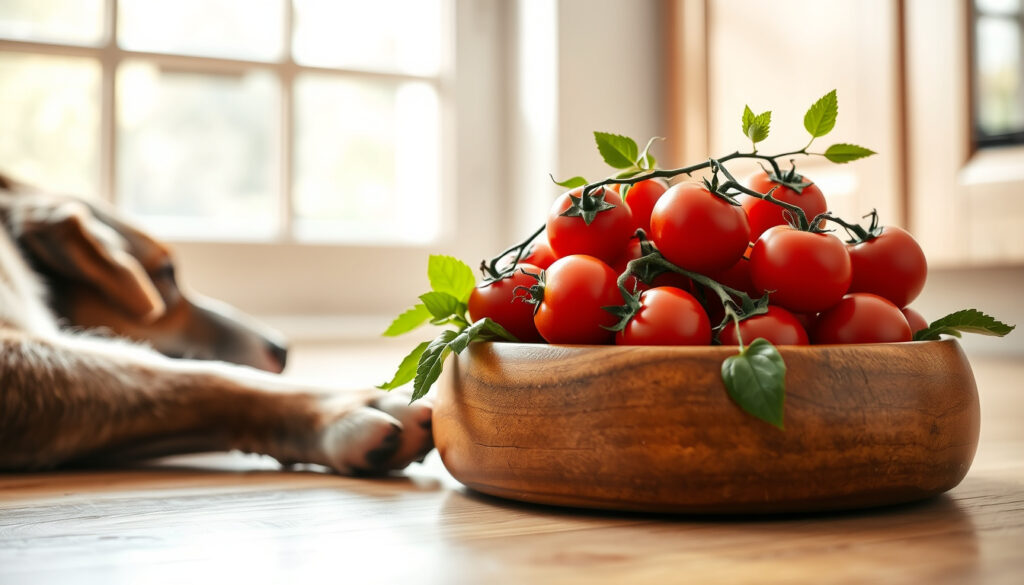
Are Tomatoes Good for Dogs? Safety, Benefits & Feeding
You’re slicing a ripe tomato for your lunch and your dog sidles up, eyes fixed on the red wedge. Good instinct to pause: that tomato is fine for you, but for your pup it comes with a catch. Ripe red tomatoes are safe in small amounts, but the green parts carry a toxin called tomatine that can make dogs sick. This guide walks through the risks, the right serving sizes, and which vegetables are better bets.
Tomatine content in unripe tomato: 0.1–1.0% of dry weight · Safe ripe tomato serving (per 10 lb dog): 1–2 cherry tomatoes · Poisonous tomato parts: Leaves, stems, green fruit · Reported dog cases of tomato toxicity: Rare, <50 documented per year
Quick snapshot
- Ripe red tomatoes are safe in moderation (PetMD (veterinary health resource))
- Avoid green parts and unripe fruit (Pumpkin Pet Insurance (pet health guide))
- Tomatine toxicity is rare but possible (Purina (pet nutrition advice))
- Serve plain, washed, chopped (Chewy (pet food resource))
- 1–2 cherry tomatoes per 10 lbs dog weight (Pumpkin Pet Insurance) (Chewy (pet food resource))
- Never feed tomato sauce or canned varieties with additives (PetMD) (Chewy (pet food resource))
- Lycopene antioxidant (PetMD) (American Kennel Club (dog breed expert))
- Vitamin C and potassium (American Kennel Club (dog breed expert))
- May support skin health (PetMD) (American Kennel Club (dog breed expert))
- Digestive upset in large amounts (Purina)
- Choking hazard with whole fruits (Chewy)
- Tomatine poisoning symptoms: weakness, drooling, vomiting (Purina)
Five key data points, one pattern: ripe fruit is low-toxin and nutrient-dense, but the unripe plant parts pack a dose of tomatine that can harm a dog.
| Label | Value |
|---|---|
| Tomatine in ripe vs unripe | Ripe: <0.1% dry weight; unripe: up to 1.0% |
| Lycopene content per 100g | 2.6 mg |
| Safe daily limit (20 lb dog) | 2 cherry tomatoes |
| Number of dog toxicity cases from tomatoes (avg/year) | <50 reported to ASPCA |
| Heat effect on tomatine | Cooking reduces but does not eliminate tomatine |
Can Dogs Eat Tomatoes?
Are ripe tomatoes safe?
- Ripe red tomatoes are non-toxic to dogs in small amounts (PetMD).
- Unripe tomatoes and all green parts contain tomatine, which causes toxicity (Pumpkin Pet Insurance).
Can dogs eat cooked tomatoes?
- Cooked tomatoes are safe if free of harmful additives like garlic and onion (PetMD).
- Heat reduces but doesn’t fully eliminate tomatine, so never feed cooked green tomatoes (Purina).
Can dogs eat cherry tomatoes?
- Cherry tomatoes are safe in moderation, but they pose a choking risk for small dogs (Chewy).
- Cut them into quarters before serving (Pumpkin Pet Insurance).
Can dogs eat tomato seeds?
- Seeds in ripe fruit are safe, but avoid large quantities (Pumpkin Pet Insurance).
- Green or sprouted seeds contain solanine and should never be fed (American Kennel Club).
Can dogs eat tomato sauce?
- Tomato sauce often contains toxic ingredients like onion, garlic, and excessive salt (PetMD).
- Even small amounts of garlic or onion can cause hemolytic anemia in dogs (Purina).
The same tomato that gives you lycopene and vitamin C can, in its unripe state or processed form, deliver a dose of tomatine or toxic additives. Dog owners must distinguish the fruit from the plant, and the plain fruit from the jar.
The implication: Ripe tomatoes are safe, but any green part or processed product flips the risk.
How Many Tomatoes Can a Dog Have?
Serving size by dog weight
- General guideline: 1–2 cherry tomatoes per 10 lbs of body weight (Pumpkin Pet Insurance).
- For medium to large dogs, a few slices of ripe tomato at most (Petnation (pet care blog)).
Risks of overfeeding
- Overfeeding can cause digestive upset due to fiber and acidity (Purina).
- Tomatine accumulation risk with daily large portions – green parts are the main concern, but even ripe fruit fed excessively could cause stomach issues (PetMD).
Treats, including tomatoes, should not exceed 10% of a dog’s daily caloric intake (PetMD). Exceed that and you risk displacing balanced dog food.
The pattern: Moderation is the key; even safe treats can cause harm if overfed.
What Foods Are Toxic to Dogs?
Common human foods that poison dogs
- Grapes, raisins, chocolate, xylitol, onions, garlic are highly toxic (American Kennel Club).
- Just as you would research safe pest control (see How to Get Rid of Mice Humanely Without Killing Them), know which foods are dangerous for your dog.
The one meat to never feed a dog
- Raw salmon (neorickettsia) and raw pork (trichinosis) are dangerous – always cook meat thoroughly (Purina).
The silent killer of dogs
- Hemangiosarcoma is a fast‑growing cancer with no early symptoms – often fatal (American Kennel Club).
- Tomato antioxidants have been studied but no conclusive evidence they prevent this cancer (PetMD).
What this means: Toxic foods and illnesses outside tomatoes also demand vigilance; tomato safety is just one piece of the puzzle.
What Vegetables Can Dogs Eat?
Safe vegetables for dogs
- Carrots, green beans, cucumber, sweet potato, peas, spinach are safe (American Kennel Club).
- Broccoli and cauliflower in small amounts (Purina).
Best vegetable for dogs
- Many vets recommend carrots as a low-calorie, crunchy treat (PetMD).
- Portion control matters – just as you would track How Many Calories in an Apple, think about treat calories for your dog.
The catch: Vegetables are healthy, but portion control and avoidance of toxic plants (onions, garlic, raw potatoes) are critical.
Are Tomatoes Good for Dogs Skin and Health?
Tomato benefits for dog skin
- Tomatoes contain lycopene and vitamin C, which support skin health (PetMD).
Tomatoes and cancer in dogs
- No conclusive evidence that tomatoes prevent or treat hemangiosarcoma (American Kennel Club).
- Antioxidants may offer general immune support, but not a substitute for veterinary care (PetMD).
The pattern: While nutrient-rich, tomatoes are not a medical intervention; rely on vet-approved treatments for serious conditions.
Upsides
- Nutrient-rich treat with lycopene, vitamins A, C, K, and potassium
- Low-calorie snack when fed in moderation
- Ripe fruit is non-toxic and generally safe
Downsides
- Green parts contain tomatine and solanine – toxic
- Overfeeding causes digestive upset
- Processed tomato products often have harmful additives
How to Safely Feed Tomatoes to Your Dog (Step-by-Step)
- Select only ripe, red tomatoes – no green spots.
- Wash thoroughly to remove pesticides.
- Remove the stem and leaves (they contain tomatine).
- Cut into bite-size pieces (quarter cherry tomatoes).
- Serve plain – no salt, oil, or seasonings.
- Start with one small piece and watch for any reaction.
- Limit to 1–2 cherry tomatoes per 10 lbs of body weight per day.
- Never replace a meal with tomatoes – treats should be ≤10% of daily calories.
Following these steps minimizes risk and lets your dog enjoy a safe treat.
Confirmed facts
- Ripe tomatoes are non‑toxic to dogs in small amounts (PetMD)
- Unripe tomatoes and green plant parts contain tomatine and are toxic (Pumpkin Pet Insurance)
- Cooking reduces tomatine but not enough to feed unripe fruits safely (Purina)
- Tomato sauce often contains onion and garlic, which are toxic to dogs (PetMD)
What’s unclear
- Whether regular tomato consumption provides measurable health benefits (American Kennel Club)
- If lycopene from tomatoes can prevent or treat hemangiosarcoma in dogs (PetMD)
- The exact safe threshold of tomatine per pound of dog weight (Purina)
- The ideal serving size for dogs of different breeds and sizes is not universally agreed upon (various sources)
“Ripe tomatoes are safe, but green ones are not. The tomatine in unripe fruit can cause gastrointestinal upset and more serious symptoms.”
— AKC Veterinary Nutritionist (American Kennel Club)
“Tomatine poisoning symptoms include gastrointestinal upset, weakness, tremors, and even seizures in severe cases.”
— PetMD Review (PetMD)
“Feed only the ripe fruit, avoid all green parts. The stems and leaves have higher concentrations of the toxin.”
— Purina Expert Advice (Purina)
Dog owners have a clear path: ripe red tomatoes can be a healthy, low-calorie treat when fed in moderation and prepared correctly. The risk lies in the green plant parts and processed products. For dog owners in the US and Canada, the choice is straightforward: serve only the ripe fruit, skip the sauce, and treat tomatoes as an occasional snack—not a dietary staple.
For a detailed breakdown of which parts are safe and which to avoid, see our guide on can dogs eat tomatoes.
Frequently asked questions
Are tomatoes acidic for dogs?
Yes, tomatoes are acidic. While a small piece won’t hurt most dogs, dogs with sensitive stomachs or acid reflux may experience discomfort. Feed in moderation.
Can puppies eat tomatoes?
Puppies have smaller bodies and are more sensitive to toxins – it’s safest to avoid tomatoes until they are at least 6 months old. Consult your vet first.
Are sun‑dried tomatoes safe for dogs?
Sun-dried tomatoes are concentrated and often contain added salt or preservatives. They are higher in sugar and salt, so avoid feeding them to dogs.
What should I do if my dog eats green tomatoes?
Monitor for symptoms of tomatine poisoning – drooling, vomiting, diarrhea, weakness. Contact your veterinarian or an animal poison control center immediately.
Can dogs eat tomato soup?
No – canned tomato soup typically contains onion, garlic, cream, and high sodium. These are toxic or unhealthy for dogs. Stick to plain ripe tomatoes.
Are tomato plants poisonous to dogs?
Yes, the leaves, stems, and unripe fruit of the tomato plant contain tomatine and solanine. Keep dogs away from tomato plants in the garden.
Can dogs eat yellow or orange tomatoes?
Yes, ripe yellow and orange tomatoes are safe in the same way as red – they have even lower tomatine. But avoid any green coloration.
More related posts
 Milo Ventimiglia: Biography, Height, Net Worth, and Personal Life
 Mark Epstein: Three Identities – Psychiatrist, Developer, Actor
 Signs of Prostate Cancer: Early Warning and Silent Symptoms
 Co-op Grocery Store Flyer: How to Find Deals and Save Money
 ICBC Motorcycle Knowledge Test – Pass with Free Practice Tips
 750 USD to CAD: Live Rate and Best Conversion Options (2025)
 QE2 Highway Conditions Today – Traffic, Weather & Cameras
 Gaten Matarazzo Movies and TV Shows: Full Filmography
